
Australia's Manufacturing Productivity Crisis and the Technology Gap Behind It
By Nisarg Shah ·
Australian manufacturing productivity has fallen for a decade, even as the rest of the economy grew. Government research points to a specific cause: established companies adopt new technology more slowly than younger, more agile ones, defaulting to defensive strategies instead of investing. Nowhere is that gap more visible than on the shop floor, where most job shops are still scheduling production the same way they did ten years ago.
Why is manufacturing productivity declining in Australia?
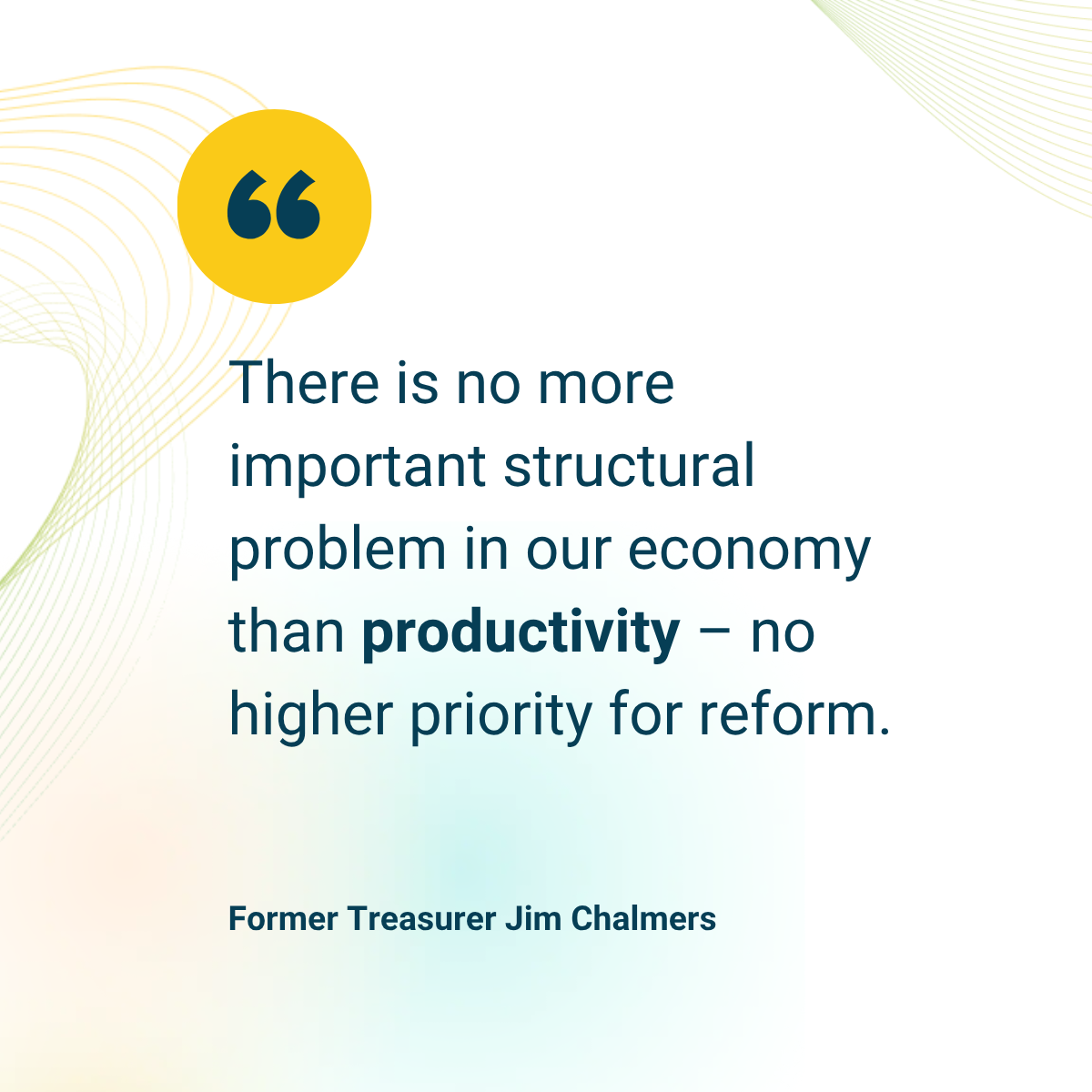
"There is no more important structural problem in our economy than productivity, no higher priority for reform," said Treasurer Jim Chalmers. In the 2024–25 budget, the Australian government committed $22.7 billion over the next decade to fund the Future Made in Australia initiative, a direct response to a productivity crisis hitting manufacturing harder than most industries.
The Australian Industry Group's Manufacturing in Australia 2025 report shows the sector has gone backwards over the past decade, not forwards. And by mid-2024 the sector had fallen into recession.
Manufacturing Labour Productivity:down 4% over the past 10 years. In plain terms, the same hour of work now produces less than it did a decade ago.
Manufacturing Multifactor Productivity: down 1% over the past 10 years. This measure also accounts for what's spent on equipment and technology, not just hours worked, so it's the clearer signal of whether new tools and smarter processes are actually paying off. Even by that measure, the industry is going backwards.
Over the same ten years, the rest of the Australian economy grew productivity by 5%.
This problem isn’t unique to Australia, and nor is it new. But manufacturing's backslide since the pandemic is worth paying attention to. For companies, it means declining profits and weaker global competitiveness. For people, it means wage stagnation and higher cost-of-living pressure.
Why are Australian manufacturers slower to adopt new technology?
The Australian Treasury wanted to know how Australia compared to other OECD countries in terms of frontier firms or laggard enterprises. It found the productivity gap between global frontier firms and the average Australian company had widened since the 2000s, because Australian firms have been slower to adopt cutting-edge technology and processes.
Growth rates in manufacturing were fairly similar between Australian companies and global frontier firms from 2009 onwards, likely due to competitive trade pressures, but the gap between the leaders and the rest of the pack was still wide. In practice, that means the average Australian manufacturer is significantly underperforming compared to the top firms in its industry.
The issue isn't a lack of technological progress. It's that new technology is too slow to spread from shop to shop, compared to other advanced economies.
Why do older, established companies fall behind on technology?
The theory goes that new companies are more likely to adopt and invest in emerging technology, pushing them to become industry forerunners with higher productivity. More mature enterprises tend to drop behind, switching from offensive to defensive strategies and reducing their technology spend.
That's exactly what the Australian government found in its 2022 Reaching for the Stars working paper.
Manufacturing startups begin with a blank slate. They don't have existing capital they need to replace or pay off. They're open to new ideas. They're scrappy, hungry, innovative.
So whether you're a job shop or a fabricator, the older and larger your company gets, the more likely you are to fall into the incumbent trap: thinking your current momentum will keep you moving forward at the same clip. The reality is the opposite. The longer you've been running, the more diligent you need to be about testing new technology, not less.
Is this actually happening on Australian shop floors?
Yes, and the numbers back it up. A 2026 survey of Australian and New Zealand fabricators found that 96% run digital accounting software, but just under half still track production on paper, and a third are still working off a whiteboard. Industry-specific production software, the kind built to actually run a job shop rather than just do the books, sits at just 26% adoption.
Most Australian fabrication businesses digitised the office years ago and left the shop floor exactly where it was. That's the technology diffusion gap from the Treasury report, playing out on the ground, right now.
Will production scheduling software actually pay for itself?
The skepticism is that a manufacturing operations or execution system won’t have enough of an impact, that you'll sink months into an implementation and end up with a system nobody actually uses.
This is the same defensive posture the Treasury paper described: low-tech-adoption companies pulling back on tech spend rather than risk another write-off. The shops closing the productivity gap aren't avoiding new tools. They're finding the one built for how they actually work. See how production scheduling built specifically for job shops is built around job shop complexity instead of mass production.
Customer evidence: practical transformation on the factory floor
Klinger Australia's published implementation account describes wireless sensors fitted to nine machines without accessing their internal controllers or PLCs. Operator tablets capture why machines become idle, and the rollout included staff training. This connects machine-utilisation data with the people who can explain and address lost production time.
SmartShopFloor's approach combines process improvement, ERP integration, operator tools and, where needed, its own sensors and Andon hardware. Schlam Payload's transformation brings MYOB Exo, SolidWorks and PrimeCut nesting together with production screens, operator tools and supervisor training. These examples show why adoption is more than installing an application: the information, work practices and people need to operate together.
Frequently asked questions
Where should a manufacturer start with digital productivity improvement?
Start with a specific operational problem, such as time lost chasing job status or repeatedly rebuilding the schedule. Map the process, establish a baseline and involve the people doing the work before deciding which tools and integrations to introduce.
Does adopting SmartShopFloor mean replacing our ERP?
No. SmartShopFloor can work alongside an existing ERP, connecting production planning and execution with business information. Scheduling, process flows and routing can be defined in SmartShopFloor even if the ERP does not provide routing or MRP.
How should we measure whether a manufacturing transformation is working?
Compare throughput, delivery performance, work-in-progress and time spent coordinating production before and after implementation. Use comparable periods and account for changes in job mix, staffing and available capacity rather than attributing every change to software.