

Klinger Australia
Machine downtime visible without touching PLCs
Klinger Australia fitted our wireless sensors to its machines. Its leaders wanted a real-time view of jobs through each machine to improve material recovery and customer service. Klinger's published article describes wireless sensors fitted to nine machines without accessing internal controllers or PLCs, and operators record reasons for idle time on tablets. Klinger describes visibility of machine behaviour that supports preventative maintenance, without quantifying a productivity gain.
Historical customer account: 2021 rollout
Certified partner
- ISO 9001Quality management
- ISO/IEC 27001Information security
“Planning well to optimise material recovery and have a greater, real-time view of jobs through each of our machines means we can further improve customer service levels.”
Source: Klinger Australia begins the shift towards Industry 4.0 (opens in a new tab)
“To be the best at what we do – we have to fulfill our customers’ complete list of requirements and be better than our competition and peers.”
Source: Klinger Australia begins the shift towards Industry 4.0 (opens in a new tab)
Dated milestones
Where it started
Phase 1: sensors on nine machines
Wireless temperature and vibration sensors fitted to nine machines, with two 4G gateways relaying data to a cloud portal.
Klinger Australia article (opens in a new tab)What shipped
Phase 2: operator training, AMGC visit
Operators trained to log in, log off and select idle reasons. Klinger's article records an AMGC visit in April 2021.
Klinger Australia article (opens in a new tab)What was planned next
Phase 3: ERP integration, as planned in 2021
The 2021 article scheduled ERP integration for mid-2021. This records the plan at that time only; completion has not been verified.
Klinger Australia article (opens in a new tab)
Context
- Klinger’s Western Australian production facility introduced COREIoT Smart Shop Floor in a phased Industry 4.0 rollout.
- Klinger’s published article describes sensors installed on nine machines.
- A separate September 2021 video transcript discusses five monitored work centres; these are distinct source accounts, not a combined installation count.
How they use it
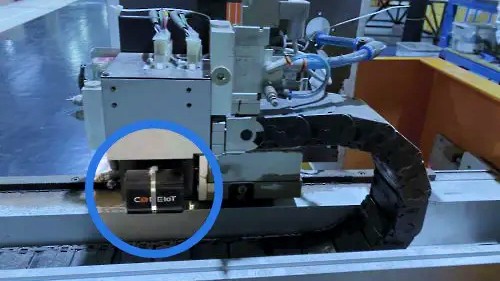
- Wireless sensors mounted on moving parts sense temperature and vibration to record machine uptime and downtime.
- Two 4G IoT gateways relay sensor data to a cloud-based portal accessible to supervisors.
- When a machine becomes idle, an Android tablet prompts the operator to record the reason.
- The article describes ERP integration as a planned third phase in 2021, not a confirmed completed outcome.
What they reported
- Klinger describes connecting machines without accessing their internal controller or PLC.
- Operators record reasons for idle time, helping supervisors respond to downtime.
- The article describes visibility of equipment behaviour to support preventative rather than reactive maintenance; it does not quantify a productivity gain.
How the business changed
The connected processes, systems and shop-floor implementation behind this customer story.
Our own sensors, connected to existing machinery
COREIoT, the business behind Smart Shop Floor, develops and manufactures its own sensors for machine utilisation monitoring. Klinger's published account describes wireless temperature and vibration sensors fitted to nine machines without accessing their internal controllers or PLCs. Two 4G gateways connect the shop floor to a cloud portal.
Turn machine signals into operational action
When a machine becomes idle, its operator receives a tablet prompt to record why. Supervisors can distinguish setup, maintenance and other causes rather than seeing downtime without context. This connects physical sensing, operator knowledge and management decisions.
Train people and phase the transformation
The rollout included training operators to log in, log off and select idle reasons, with the benefits explained to staff. The 2021 article describes ERP integration as a planned later phase. It provides evidence of hardware, training and machine visibility, not confirmation that every planned phase was completed or a quantified productivity gain.
Sources
- Klinger Australia begins the shift towards Industry 4.0 (opens in a new tab)
Klinger Australia
Customer-published evidence of the nine-machine sensor rollout, controller-independent monitoring and operator downtime feedback.
- Australian innovation patent 2021103530 — Sensor System (opens in a new tab)
IP Australia
COREIoT Pty Ltd’s Sensor System innovation patent was granted on 4 August 2021. The published specification describes autonomous sensor calibration and determining machine operating state. The register lists Granted, not Certified; grant alone does not establish enforceability. This is evidence of the sensor-system patent, not a claim that the entire Smart Shop Floor platform is patented.
See how it would run in your shop.
Book a demo and we'll walk through your quoting, scheduling and shop floor workflow.
Book a time